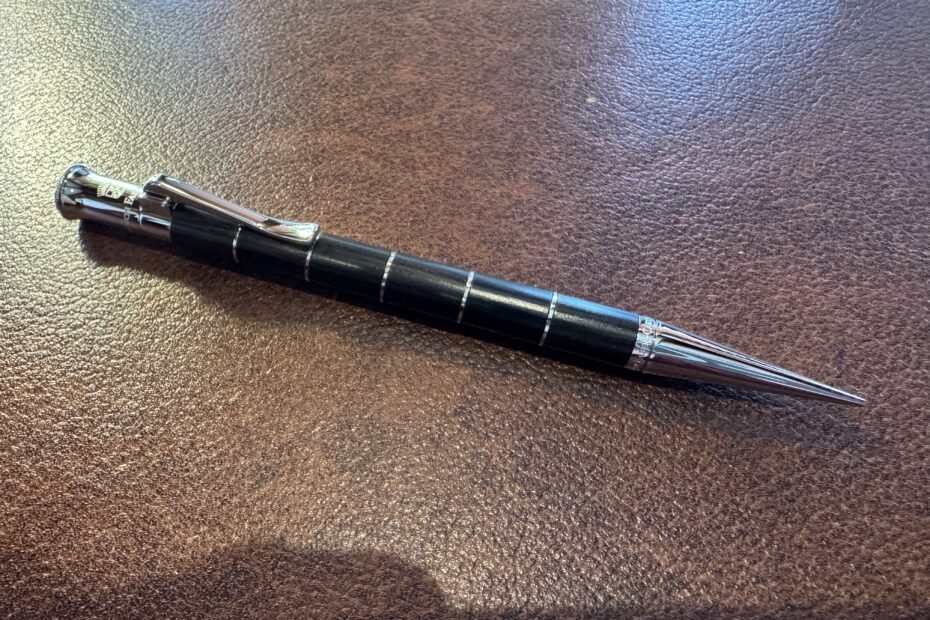
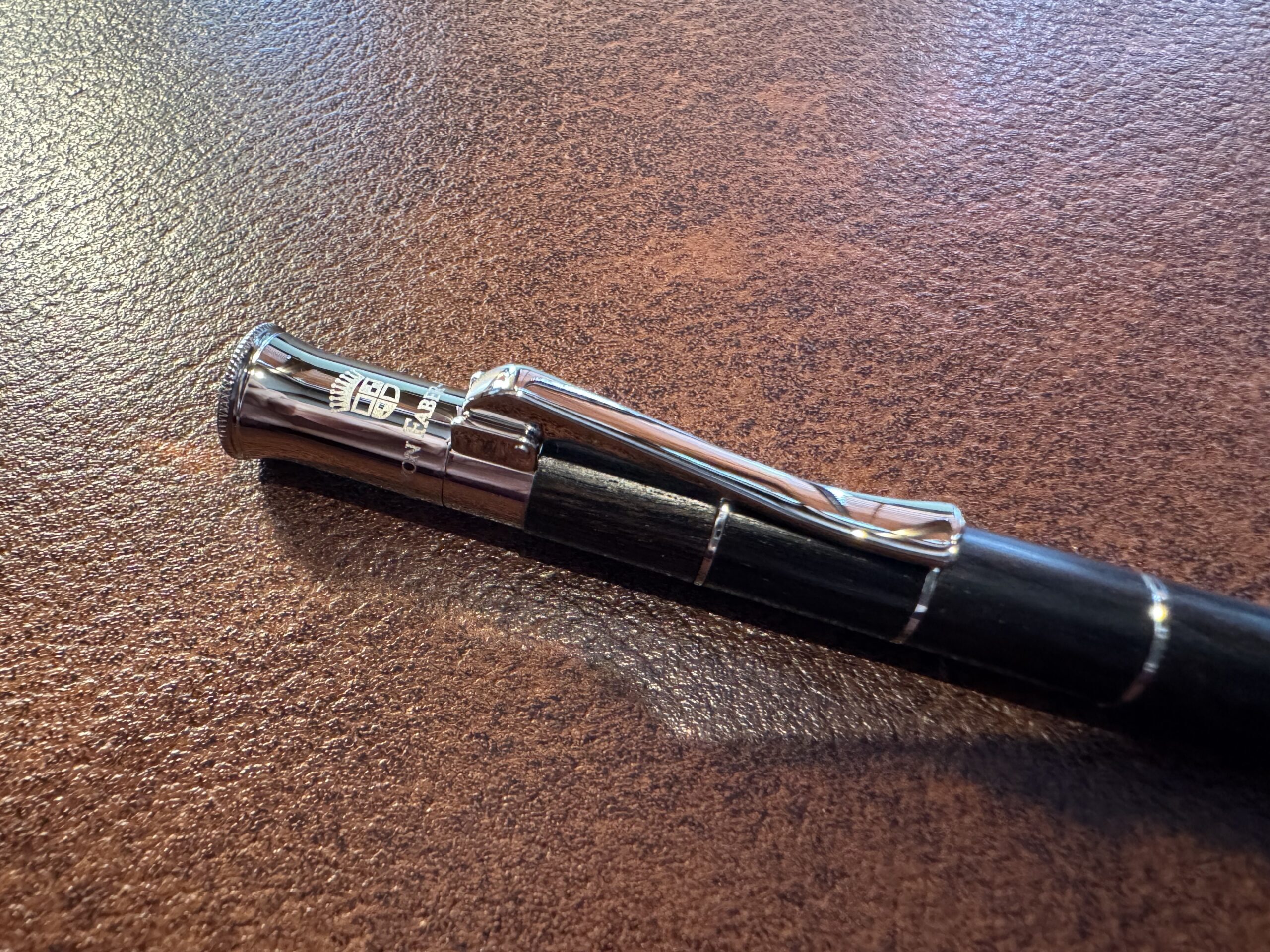
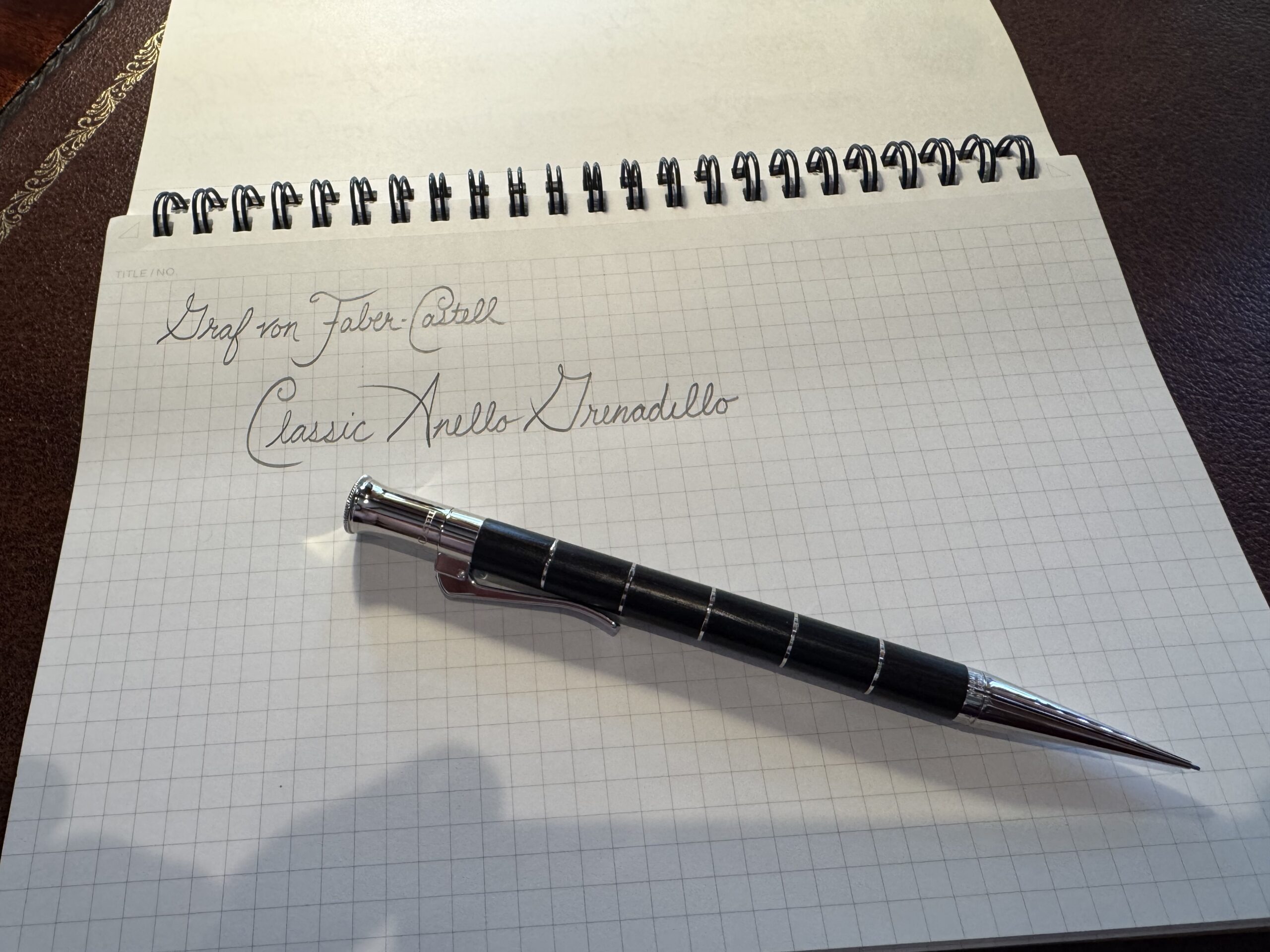
This is the Graf von Faber-Castell Classic Anello Grenadilla propelling pencil. It is a 0.7mm mechanical pencil with platinum plated cap, hinged pocket clip, tip and barrel rings. The platinum is paired with dark Grenadilla wood barrel sections. The classic design, fit and finish are stunning. In the hand, it has a satisfying weight to it and feels balanced and comfortable. The platinum plating is thick and silky. Every surface is pleasing to the touch as well as the eye. The knurling, fine engraving, and hand finishing are superb. It is a lovely pencil that lives up to Graf von Faber-Castell’s reputation.
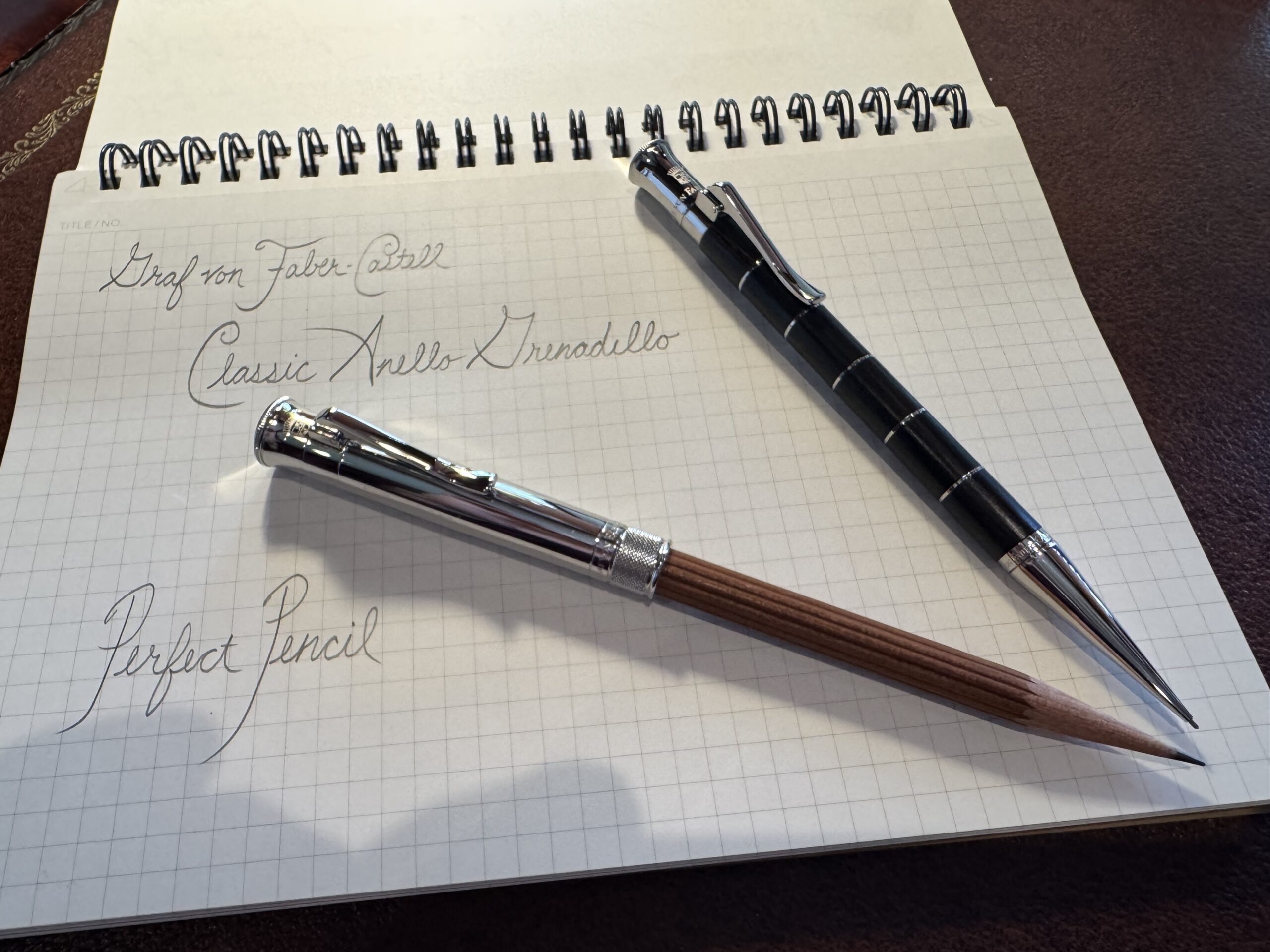
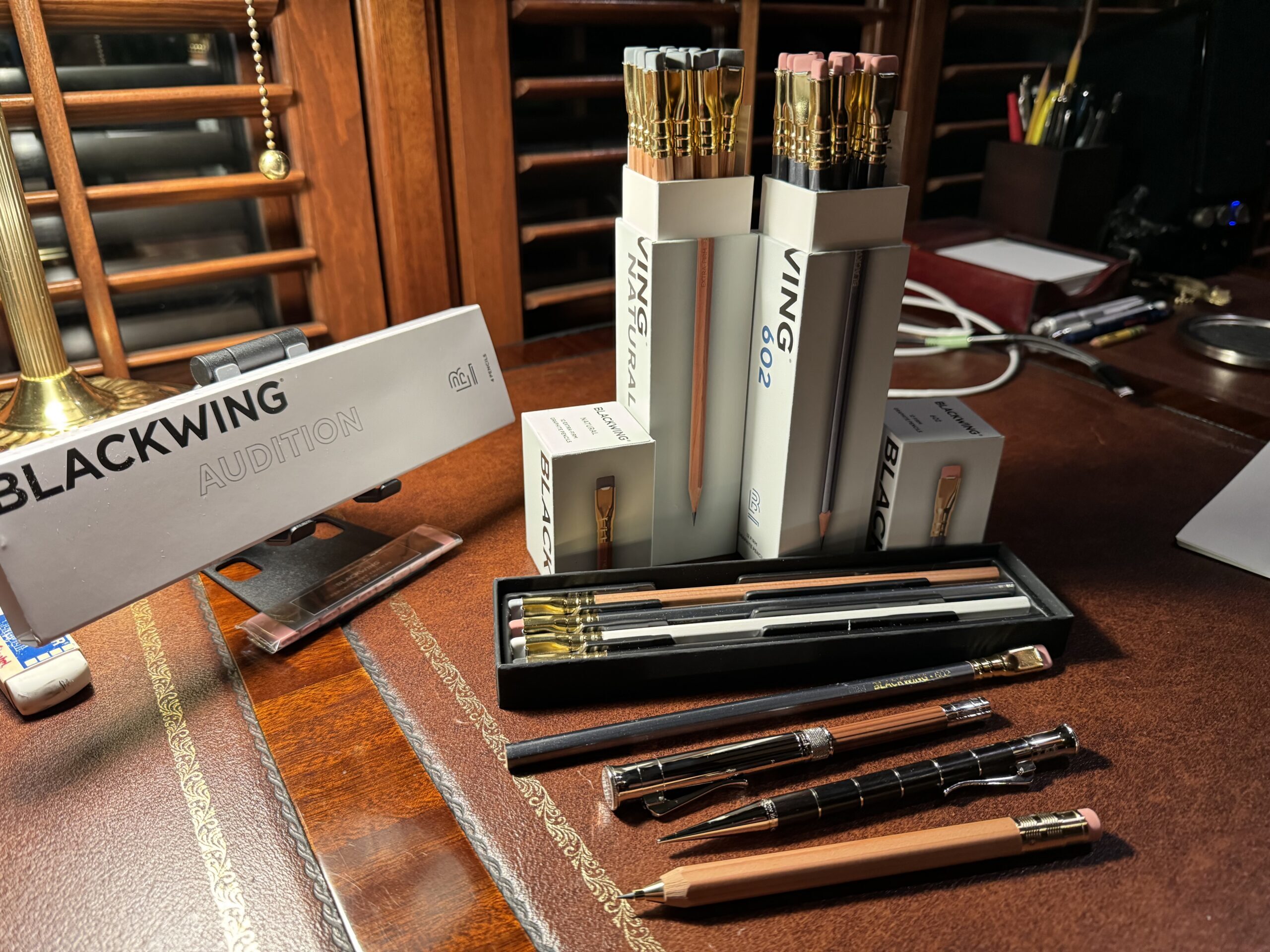
The Graf von Faber-Castell Classic aesthetic goes well with the Perfect Pencil.
It is presented in a nice wooden box.
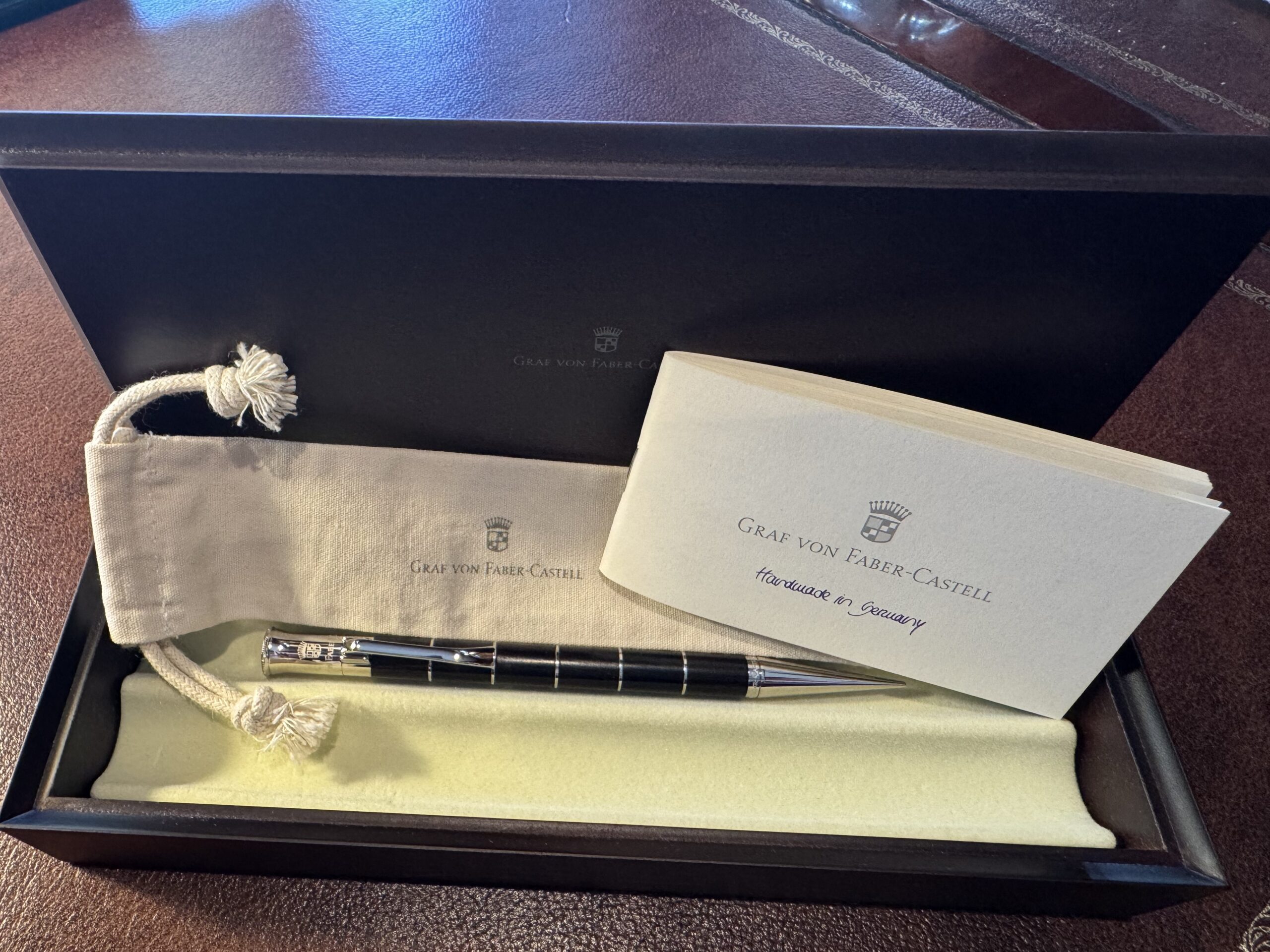
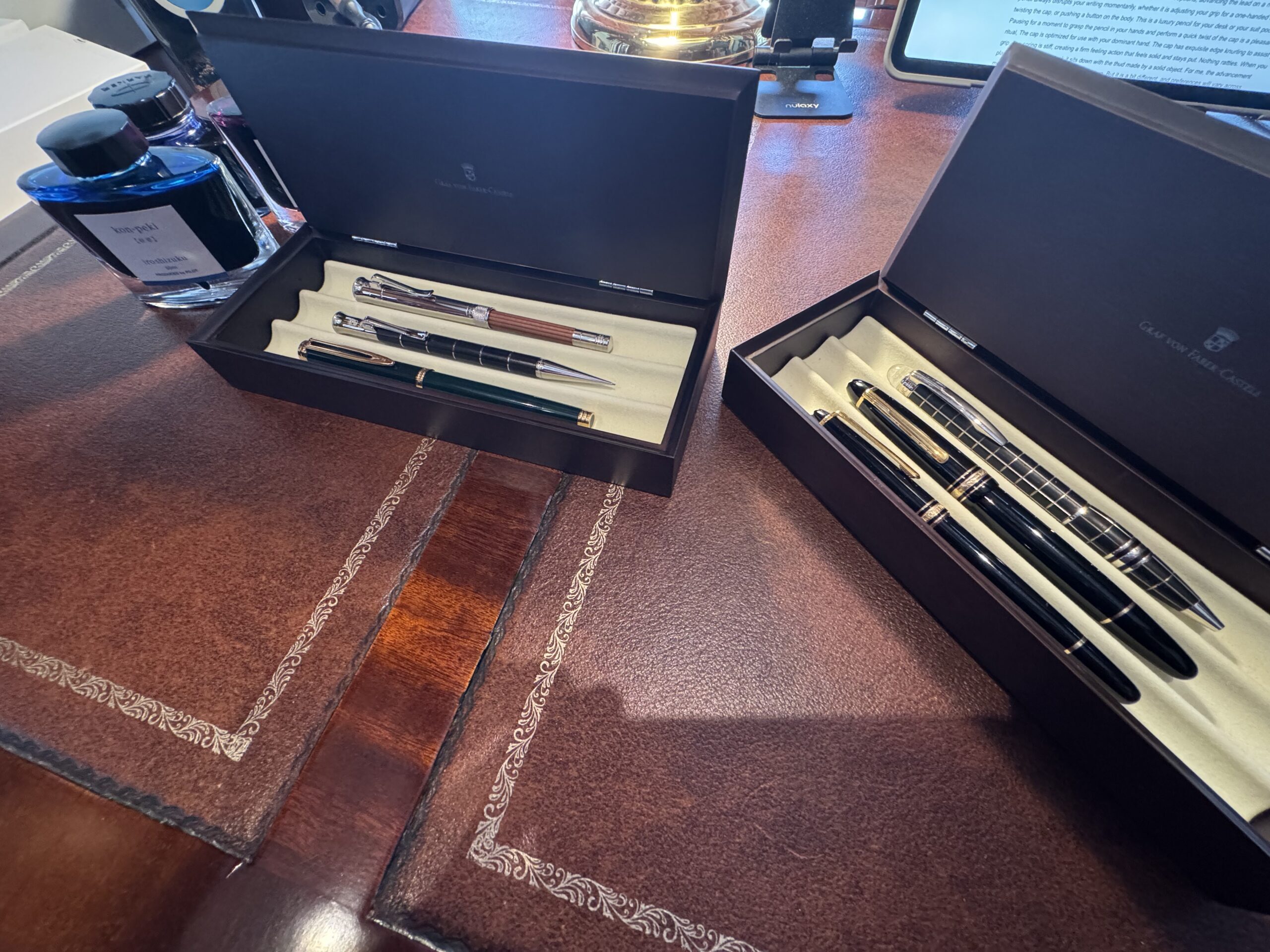
Graf von Faber-Castell is a luxury manufacturer of writing instruments, and this pencil is no exception. MSRP for the Classic Anello Grenadilla is $502, but it can be found at an authorized dealer for $365. It is 5 9/16″ (140 mm) long and the barrel diameter is just shy of 3/8″ (9 mm). Other variations are available with different plating and barrel material options which are priced accordingly.
To advance the lead, the cap is twisted one-quarter turn, which extends the lead about 1/16″. No objection to the advance rate. If the cap is held in the advance position, the lead can be retracted into the tip. No objection here either. Some higher-end pencils use a twist-advance mechanism like this, but it is relatively uncommon. In use, the lead can be advanced one-handed after adjusting your grip. Alternatively, the lead can be advanced with your other hand without the need to adjust your writing grip. One handed adjustment is a bit awkward. It may be something you could get used to and better at with practice, but it is not optimized for one-handed operation.
In my view, the lead advancement method is a nice detail that sets the pencil apart. I don’t mind two-handed operation. It’s something a little different. With very few exceptions (none of which are in the luxury space to my knowledge), advancing the lead on a mechanical pencil disrupts your writing momentarily regardless of its design.
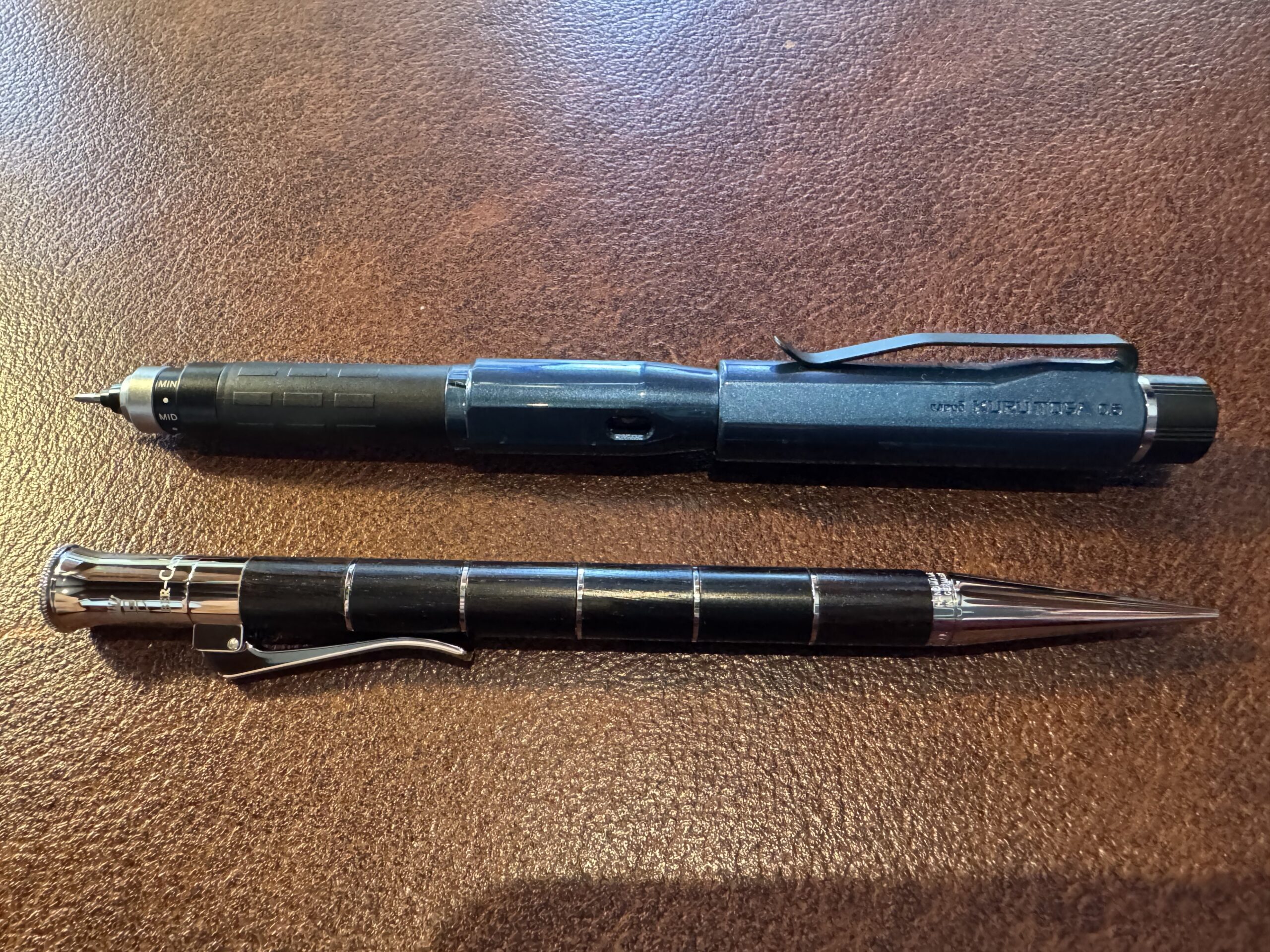
One notable exception (in theory) is the Uni Kuru Toga Dive, which automatically advances the lead as you lift and press the lead to the paper. The advancement rate can even be adjusted. But the plastic Kuru Toga Dive, while interesting and a bit pricey ($100), is not in the same league as the Graf von Faber-Castell Classic Anello in terms of material, build quality, design, or long term durability. Furthermore, the sponginess of the tip, which must retract slightly into the barrel in order to operate the lead advancement and rotation mechanisms, is a bit distracting and only works okay. Putting this sort of marginal and compromising mechanism on an heirloom quality writing instrument just won’t do.
Pausing for a moment to grasp the pencil in your hands, admire it, and perform a quick twist of the cap is a pleasant little ritual. The cap is optimized for use from above, with fine edge knurling at the top to assist your grip.
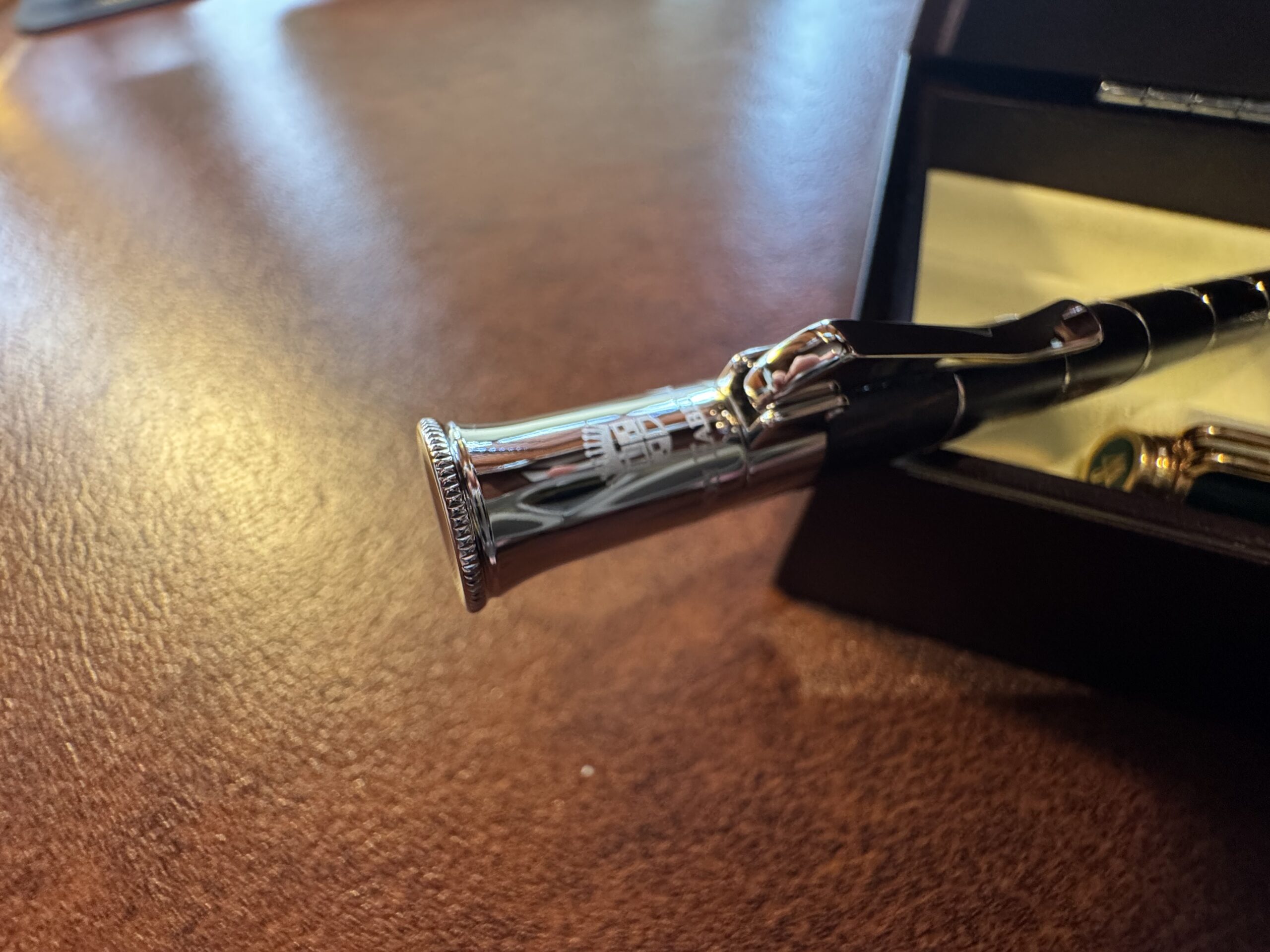
The cap requires a firm twist as the internal cam engages the internal knock button about halfway through the 90 degrees of rotation. The mechanism is smooth and virtually silent during operation, except for a very soft click.
Building the advance this way allows the cap to mate with the barrel with a very fine seam instead of sitting atop an exposed plunger. Unlike a screw advance, this design allows for an automatic feeding lead reservoir that stores multiple spare leads. It is interesting and well-executed.
In addition to propelling the lead, the cap covers a nice refillable eraser that is larger than what one normally finds on a mechanical pencil. These erasers are interchangeable with the Graf von Faber-Castell Perfect Pencil ferrules.
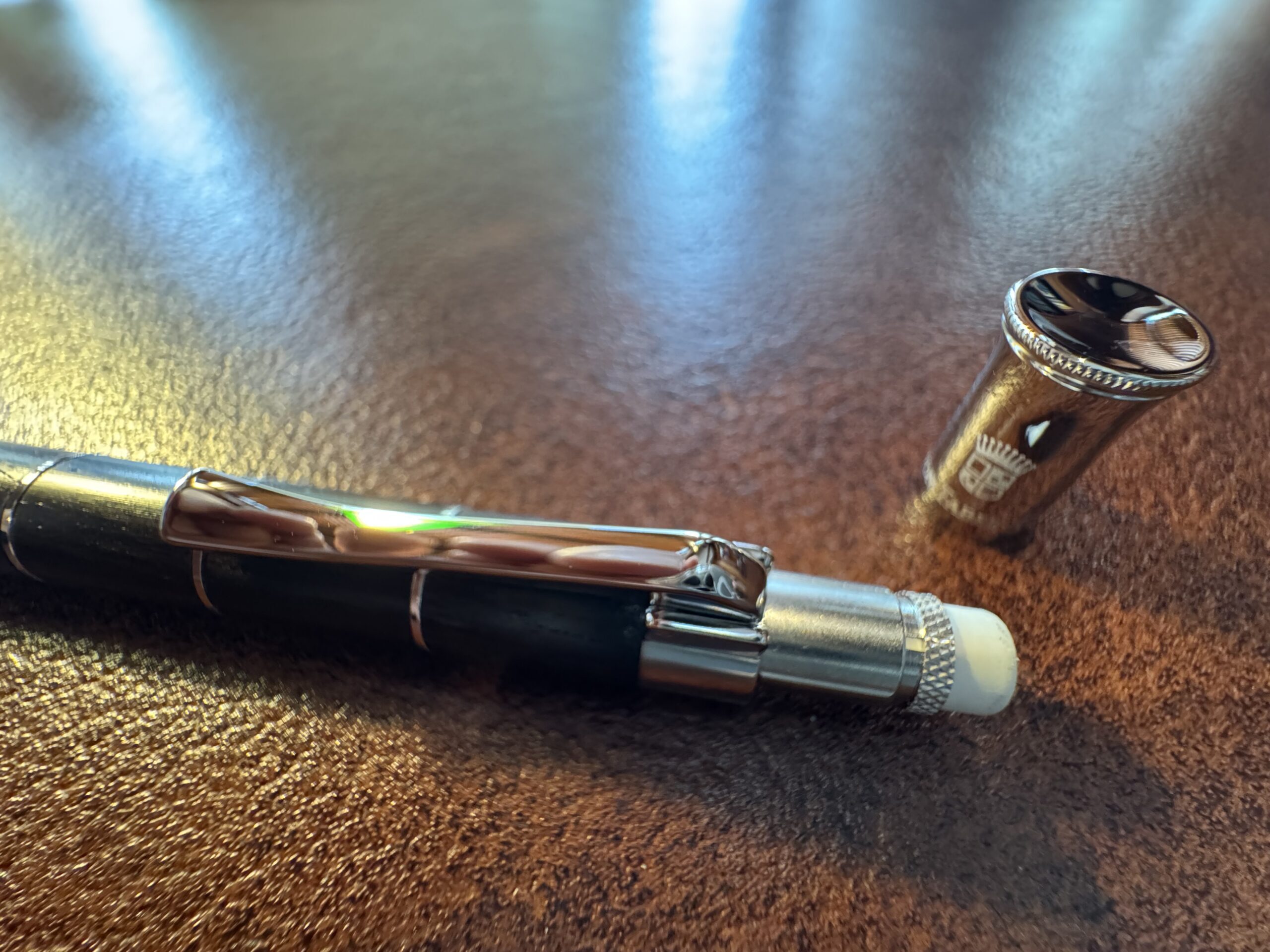
The cap has a snug sliding fit over the eraser ferrule, which provides it with sufficient purchase to operate the lead advancement mechanism. To assure that this is a durable arrangement, the cap has a bevelled brass insert which mates to a ribbed steel ferrule. The ribs are also ramped to ensure ease of use. Nicely done and made to last.
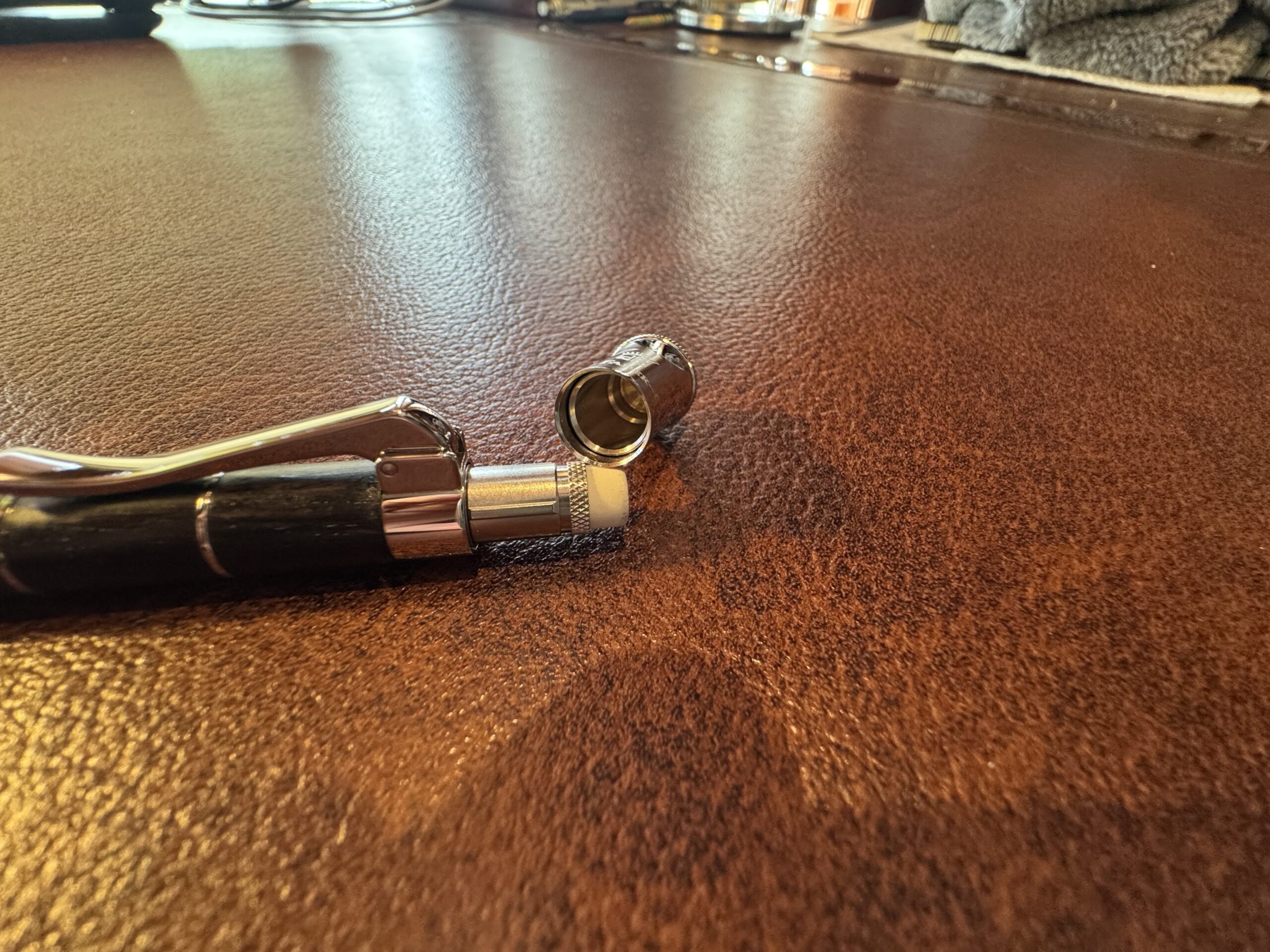
Loading lead into the reservoir is also a bit different than most mechanical pencils. Rather than removing the eraser end to load leads, the barrel is unscrewed from the tip to reveal the metal housing for the lead reservoir, which is capped with a brass plug/knock button. The eraser cap need not be removed and the lead extending from the tip of the pencil is unaffected by the loading operation. With the lead reservoir out of the pencil barrel, the lead can be advanced by pushing the top of the reservoir, just as one would with a push-button knock-style pencil. The reservoir holds up to five additional leads.
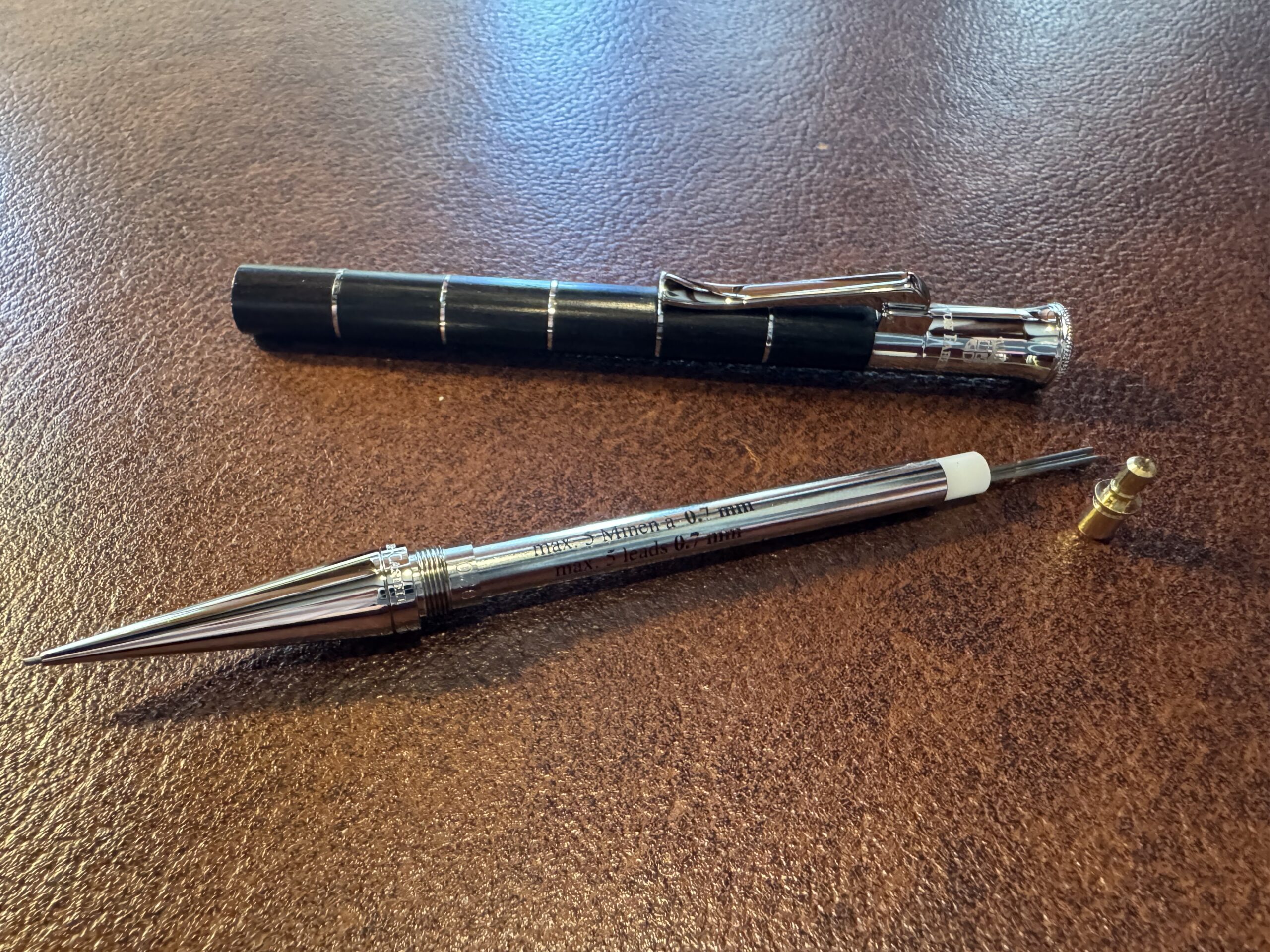
The inner barrel is brass, contributing to its pleasing weight in the hand as well as ensuring that the threads will be durable.
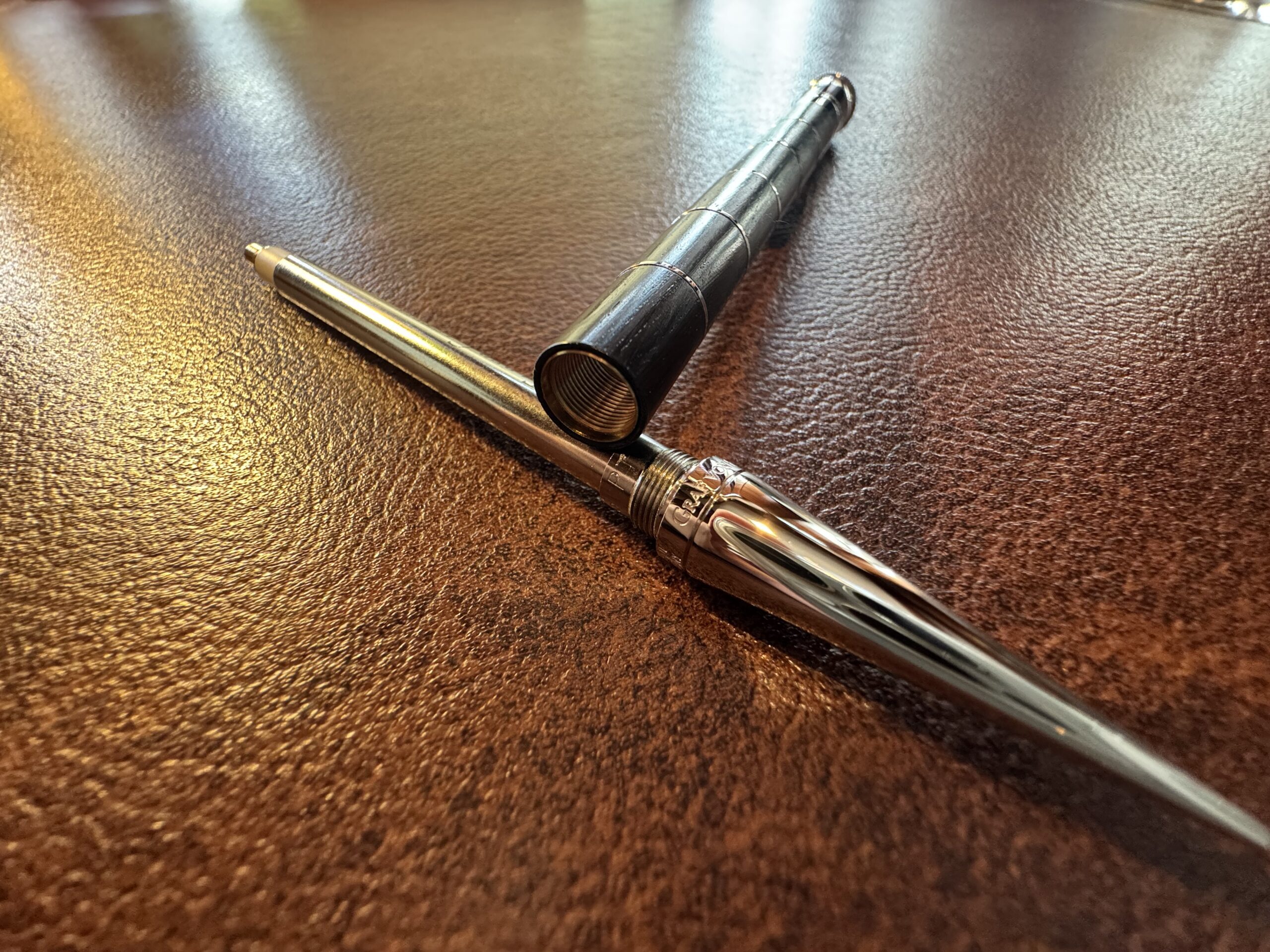
The hinged Graf von Faber-Castell pocket clip is a thing of beauty. It pivots on a pin that is peened in place and spring loaded with just the right amount of tension. The pencil slides effortlessly in and out of your pocket, but does not fall out on its own. I wouldn’t trust it for vigorous activity, but this pencil would be a strange thing to have in one’s pocket while riding a roller coaster.
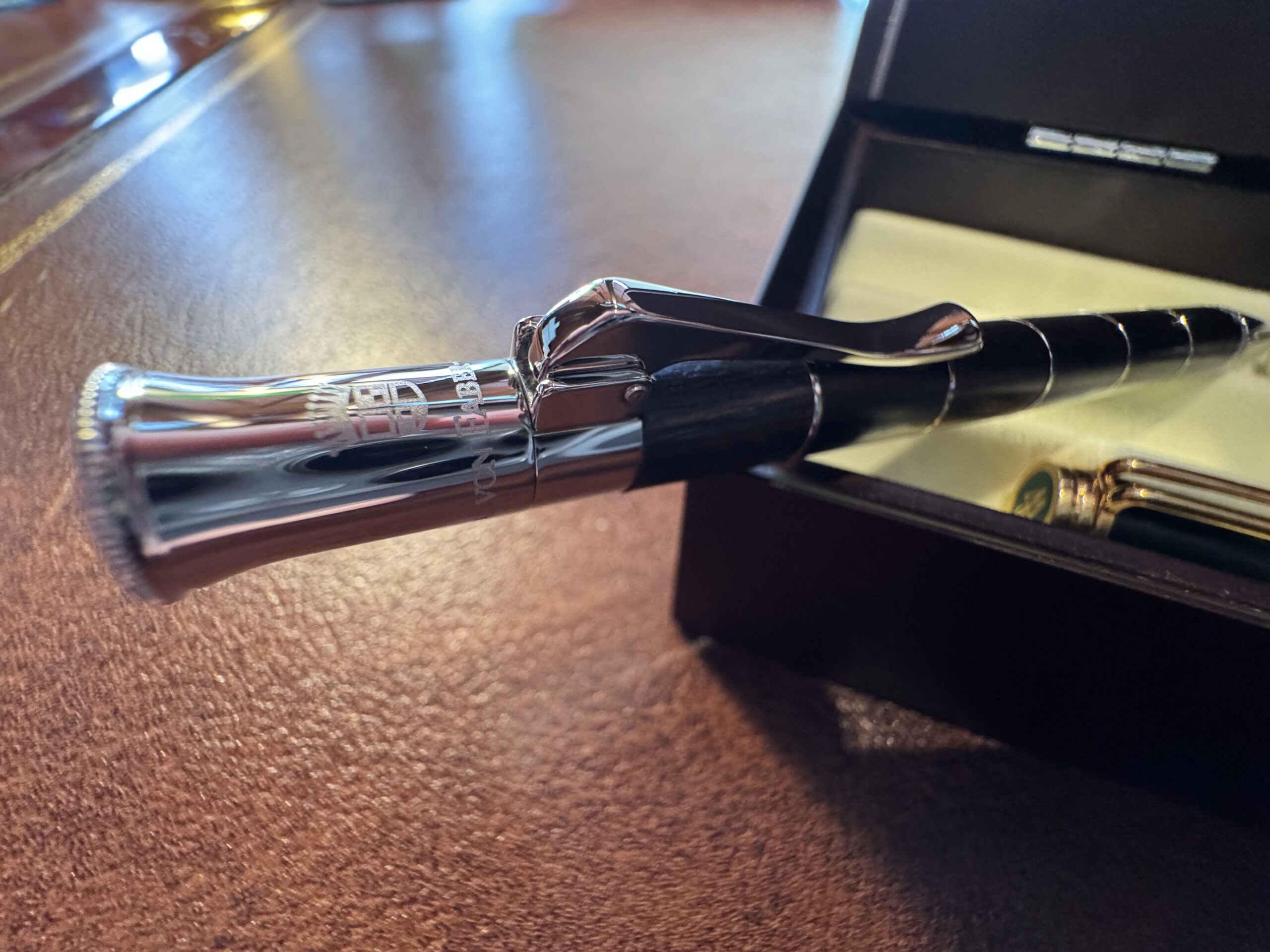
Nothing on this pencil squeaks or rattles. When you place the pencil on your desk it lands with the thud made by a solid object. The whole mechanical build is just really nice and robust. Everything is tight, smooth, and skookum.
The Graf von Faber-Castell Classic Anello Grenadilla is an interesting and beautiful luxury pencil that is very well made. I absolutely love it and highly recommend it.
Also, I’m officially a pencil nerd.
Note: I have no affiliation with Graf von Faber-Castell. I purchased this pencil with my own money from an authorized dealer at its normal asking price.